 Login
Login


 Products


 Go Back to blog listing page
Loan Against Property Vs Business Loan-What To Choose?



Imagine you own a small shop. Your shop is doing well, and you want to make it bigger or open another one. You need money for this. You think about two ways to get the money: a loan against your property or a business loan. Both are good choices, but it's hard to know which one is better for you.
Our article is here to help. We will explain both options in easy words. This will help you understand which one fits your needs the best. Keep reading to learn more and find out the best way to grow your shop.
What is Loan Against Property?
A loan against property for business is a way to get funds by offering your property as a guarantee to the lender. This type of loan, also known as a secured loan, allows you to use either residential or commercial property as collateral.
Some of the key advantages of loan against property are:
- Lower Interest Rates
- Flexible Repayment Tenure (generally up to 7 years)
- High Loan Amounts
For those considering this option, products like IIFL Home Finance Loan Against Property or Shakthi Loan Against Property are available and can be explored further for their specific terms and benefits.

Learn the benefits of a loan against property as a cost-effective financing option.
What is a Business Loan?
A business loan is a financial boost for those looking to expand their business or embark on an entrepreneurial journey.
Some of the key features and advantages of business loan include:
- Multiple types of business loans are available, like small business loans, MSME business loans, and online business loans.
- High loan amount (generally up to 10 crores)
- Easy EMI repayment plans (Up to 10 years)
Platforms like IIFL Home Loans offer an accessible route to securing a business loan, helping businesses to scale and flourish.

Explore how a business loan can fuel your company's expansion and support your entrepreneurial aspirations.
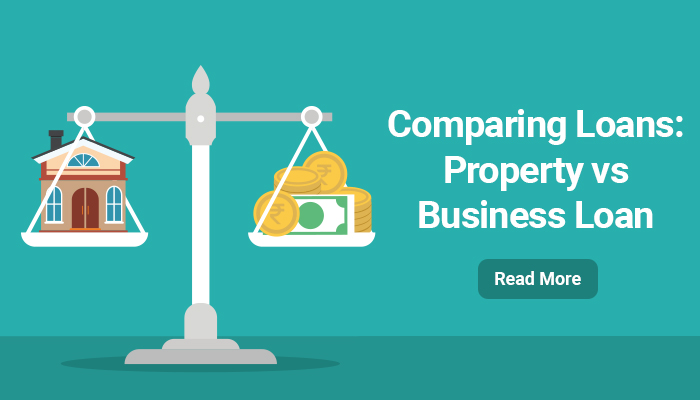
What is the difference between Loan Against Property and Business Loan?
Understanding the difference between a loan against property and a business loan is crucial when deciding how to finance your business needs. The table below will highlight the key distinctions between these two lending options across various aspects to give you a clearer picture of which loan might suit your financial strategy best.
|
Aspect |
Loan Against Property |
Business Loan |
|
Collateral |
Required (Residential or commercial property) |
Not always required |
|
Interest Rates |
Generally lower, as the loan is secured |
Can be higher due to being unsecured |
|
Loan Tenure |
Can extend up to 7 years |
Typically up to 10 years |
|
Loan Amount |
Based on the property's value |
Based on business revenue and creditworthiness |
|
Purpose |
Can be used for a variety of personal or business needs |
Specifically for business-related expenses |
Let's understand the difference using the example:
Ravi and Amit both have their own shops. Ravi decides to take a loan against his house to expand his shop. He uses his house as a promise to the bank. If he can't repay the loan, the bank can take his house. This kind of loan usually has a lower interest rate because the bank feels safer with his house as a backup.
On the other hand, Amit goes for a business loan. He doesn't use his house or any property as a promise. Instead, he shows the bank how well his shop is doing and how he plans to pay back the loan. This loan might have a higher interest rate than Ravi's because the bank doesn't have a property as a backup if Amit can't pay.
To conclude, Ravi’s loan is backed by his house, which gives him a lower interest rate, but he risks losing his house if he can't pay. Amit’s loan is based on his shop's success and his plan to repay, but he might pay more in interest because there's no property involved.

Takeaway
Choosing between a loan against property for business and a business loan against property depends on your specific financial requirements and circumstances. A loan against property might be the way to go if you need lower interest rates and have property to offer as collateral. On the other hand, a business loan could be more suitable if you require funds specifically for business growth and can meet the eligibility criteria without collateral. Both options have their advantages and can help in achieving your business objectives.
Are you ready to explore more about these financial products and decide which one fits your plans? Visit the IIFL Home Loan to read more articles and gain a deeper understanding of the financial services that can help you grow your business.
FAQs
1. Are there any tax benefits to a loan against property for business purposes?
Tax benefits for a loan against property can vary; it's best to consult a tax advisor to understand potential tax advantages.
2. What happens if I default on a loan against property?
In case of a default, the lender has the right to auction the property to recover the outstanding loan amount.
3. Can a loan against property be used for purposes other than business?
Yes, loans against property can be used for various purposes, including personal expenses, education, or medical costs.
4. Is it possible to prepay or foreclose a business loan or a loan against property?
Most lenders allow prepayment or foreclosure, but there may be charges applicable as per the loan terms.
Tags

Most Read Blogs
Loan Against Property




What can we help you with?

Home Loan

Secured Business Loan

Balance Transfer

Home Improvement Loan

Home Loan for Uniformed Services

NRI Home Loan
Home Loan
Secured Business Loan
Balance Transfer
Home Improvement Loan
Home Loan for Uniformed Services
Get instant support with existing loan related queries

Raise a Request Get instant access to your existing Loan Account with us Raise a Ticket 

Call Helpline Speak with our Customer Support Executive on 1860 267 3000

Visit Nearby Branch You can walk into any of our 300+ branches, spanning across 18 states Get Directions
Our Brands & Subsidiaries


Insurance Partners


HDFC Life Insurance
Learn more
Bajaj Life Insurance
Learn more
ICICI Prudential Life Insurance
Learn more
Go Digit General Insurance
Learn more
Aditya Birla Capital Insurance
Learn more
Bajaj Allianz General Insurance
Learn more


