 Login
Login


 Products


 Go Back to blog listing page
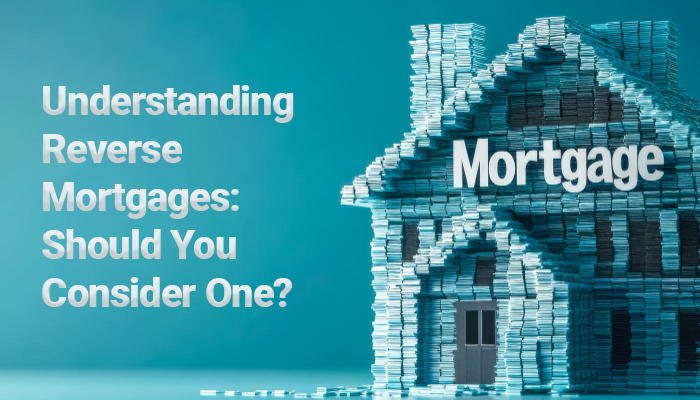
What is a Reverse Mortgage, and who should consider it?



November 24, 2024
1 min
A reverse mortgage is a good solution for senior homeowners as it provides equity for their property without immediate repayments. The need for this financial solution is rising among retirees looking to fund their living expenses or pay for medical care, all while staying in their homes. Let's delve deeper into how reverse mortgages work, their benefits, and who should consider them.
What is Reverse Mortgage?
A reverse mortgage is a loan type that allows homeowners, typically aged 60 or above, to convert part of their home equity into cash. The lender disburses payments to the homeowner, which can be used for living expenses, healthcare, or other needs. Essentially, the loan is repaid when the homeowner sells the property, moves out permanently, or passes away. This amount is based on home equity and borrower’s age, with higher amounts for older applicants.
How does a Reverse Mortgage work?
In a reverse mortgage, the lender offers funds based on home value. These funds can be taken as a lump sum, a monthly payment, or a line of credit.
- Repayment: The loan balance, interest, and fees are only due upon selling the home or when the borrower moves out permanently.
- Interest: Since no monthly payments are made, interest accumulates on the loan amount, and the balance increases with time.
Who should consider a Reverse Mortgage?

A reverse mortgage loan is suitable for senior homeowners who want to supplement their retirement income without selling their home. This financial tool can be particularly beneficial in several scenarios:
- Retirement income: Retirees with limited income can use a reverse mortgage to pay for daily expenses. It provides a sense of financial security to them with a steady income.
- Covering medical expenses: The funds can be used for healthcare, especially if other savings are low.
- Eliminating monthly debt obligations: By selecting a reverse mortgage, seniors can clear their existing home loan and decrease the monthly burden.
- Retain home ownership: Homeowners do not need to sell their property, so it is very suitable for aged individuals.
Use Home Loan EMI Calculator offered by IIFL Home Finance to understand the financial benefits of different mortgage options.
Reverse Mortgage vs. Loan Against Property
While both reverse mortgage loans and loans against property (LAP) allow homeowners to tap into their home’s equity, they differ in structure and purpose.
- Loan against Property:
- Requires monthly repayments
- Available to borrowers of all ages
- Often suited for business or personal purposes beyond retirement needs
- Reverse Mortgage:
- Primarily for seniors aged 60 and above
- Does not require monthly repayments
- Designed specifically to provide retirement income
Choosing between a reverse mortgage and a loan against property depends on the borrower’s financial goals and ability to make monthly payments. For those without a steady income, a reverse mortgage can be a suitable option.
Considerations before opting for a Reverse Mortgage
While reverse mortgages can offer significant advantages, it's important to consider the following:
- Reduced home equity: Over time, the accumulated loan amount reduces the equity available to heirs.
- Interest accumulation: The loan balance can increase significantly since interest adds up.
- Future housing needs: If moving to live becomes necessary, the reverse mortgage balance may need to be repaid.
Before committing, consider consulting a financial advisor or researching alternatives to ensure they align with long-term financial needs.
Wrapping Up
A reverse mortgage loan is a powerful tool for senior homeowners seeking financial independence during retirement. Through a comprehensive grasp of the benefits and drawbacks, elderly loan applicants can arrive at an informed decision that aligns with their desired way of life and bolsters their financial stability.
For a deeper dive into home financing options, IIFL Home Finance will guide you through a diverse range of options, each carefully selected to align with your specific retirement aspirations.
Tags

Most Read Blogs
Loan Against Property



Frequently Asked Questions (FAQ’s)
Q1. Can I apply for a reverse mortgage if I already have a home loan?
Ans:
Yes, you can, but the existing mortgage balance must be settled first. Many seniors use the reverse mortgage proceeds to pay off their home loans.
Q2. How does the loan amount for a reverse mortgage get determined?
Ans:
The amount depends on the borrower’s age, property value, and prevailing home loan interest rates. Older applicants may qualify for larger amounts.
Q3. What happens to the property after the homeowner passes away?
Ans:
The heirs can choose to repay the loan balance and retain the home, or the lender may sell the property to recover the amount. This option provides flexibility for families in handling the estate.
Q4. How does a reverse mortgage impact inheritance?
Ans:
Since the loan balance grows, it reduces the remaining home equity for heirs. It’s important to consider this when planning inheritance.
Q5. Can I sell my home if I have a reverse mortgage?
Ans:
Yes, but the reverse mortgage balance must be repaid from the sale proceeds. This repayment option allows homeowners to retain control over their property decisions if their housing needs change.
What can we help you with?

Home Loan

Secured Business Loan

Balance Transfer

Home Improvement Loan

Home Loan for Uniformed Services

NRI Home Loan
Home Loan
Secured Business Loan
Balance Transfer
Home Improvement Loan
Home Loan for Uniformed Services
Get instant support with existing loan related queries

Raise a Request Get instant access to your existing Loan Account with us Raise a Ticket 

Call Helpline Speak with our Customer Support Executive on 1860 267 3000

Visit Nearby Branch You can walk into any of our 300+ branches, spanning across 18 states Get Directions
Our Brands & Subsidiaries


Insurance Partners


HDFC Life Insurance
Learn more
Bajaj Life Insurance
Learn more
ICICI Prudential Life Insurance
Learn more
Go Digit General Insurance
Learn more
Aditya Birla Capital Insurance
Learn more
Bajaj Allianz General Insurance
Learn more


